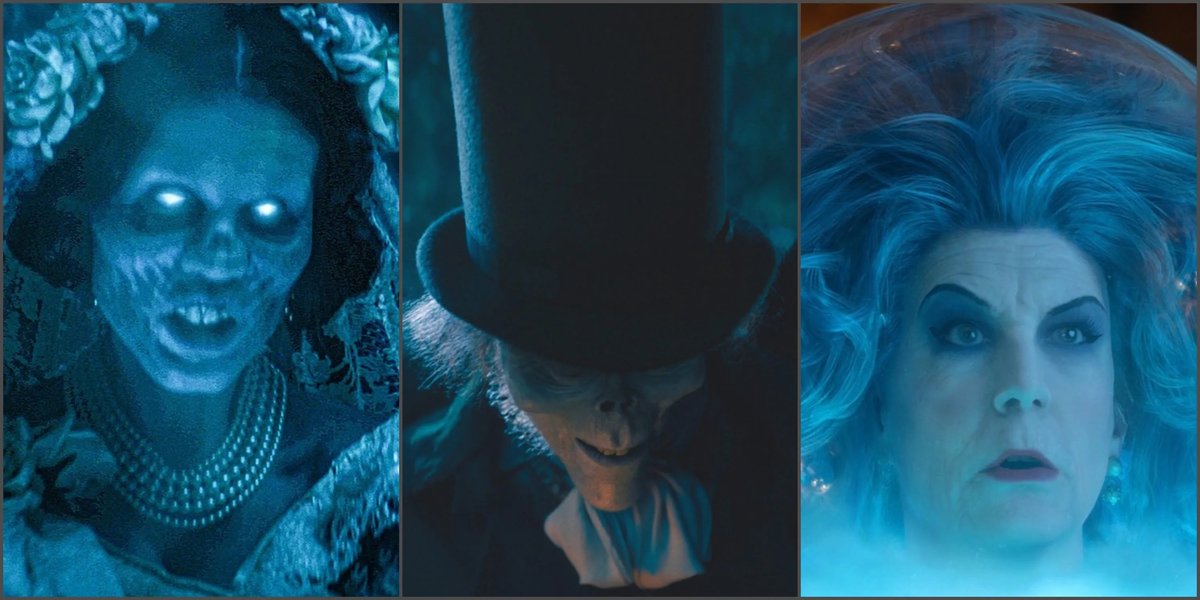
The grand, echoing halls of an old mansion, perhaps with a touch of forgotten history, often stir tales of the spectral. Whispers of resident spirits, unexplained chills, and fleeting shadows become part of the very fabric of these homes. But what if the spine-tingling accounts of mansion ghosts aren't about restless spirits at all, but rather a fascinating interplay of skepticism, science, and psychological perspectives on mansion ghosts? As seasoned journalists, we've learned that the most compelling stories often lie not in the supernatural, but in the intricate workings of the human mind and the relentless pursuit of verifiable evidence.
Let's pull back the velvet curtain and examine these ethereal encounters with a clear, inquisitive eye.
At a Glance: Unpacking Mansion Ghosts
- Skepticism isn't just debunking: It's a commitment to scientific principles, seeking truth through verifiable evidence and replicability, not just disproving claims.
- Our brains are wired for ghosts: Cognitive biases like pattern recognition and "agenticity" make us prone to seeing intentional forces where none exist.
- Memory is a storyteller, not a camcorder: Human memory is fallible, easily influenced, and prone to shaping narratives, especially concerning unusual events.
- Social proof amplifies belief: Group dynamics and shared stories can strengthen the perceived validity of paranormal experiences.
- Science seeks mundane explanations first: Before invoking the supernatural, researchers look for environmental factors (infrasound, EMF), psychological states, or natural phenomena.
The Skeptical Stance: Beyond Simple Disbelief
When a skeptic encounters a claim of a mansion ghost, their first instinct isn't to outright deny it, but to question, to investigate, and to seek verifiable evidence. This isn't about being cynical; it's about a fundamental commitment to scientific principles, driven by a desire to understand truth.
Skeptics emphasize that extraordinary claims require extraordinary evidence. The methodologies they employ prioritize replicability—meaning if a phenomenon is real, it should be observable and measurable again under controlled conditions. This often presents a significant hurdle for paranormal phenomena, which frequently occur in uncontrolled, spontaneous, and personal contexts.
A key issue in evaluating ghost stories is the heavy reliance on anecdotal evidence. Someone recounts an unnerving personal experience in an old manor, and it's compelling. But as "How Do Skeptics View Paranormal Claims?" highlights, skeptics counter this by emphasizing the need to corroborate personal accounts with tangible data, technological instruments, and objective measures. Why? Because human memory and perception, while powerful, are notoriously unreliable.
Why Anecdotes Aren't Enough
Imagine someone swears they saw a shadowy figure glide through the ballroom of a historic estate. Their conviction is absolute. Yet, a skeptic knows that their brain might have been playing tricks. Was it a trick of light? A tired mind? The mind's tendency to fill in gaps? Without independent, objective verification, that personal account remains just that: a personal account. It's a story, not a scientific data point.
The Mind's Own Mansion: A Psychological Lens
Perhaps the most fascinating perspective on ghost experiences comes from psychology. Our brains are incredibly adept at making sense of the world, even when the information is ambiguous or incomplete. This wiring, while crucial for survival, also sets the stage for perceiving things that aren't truly there.
From a psychological viewpoint, belief in paranormal phenomena often stems from cognitive biases and heuristics—mental shortcuts our brains take to process information quickly. The human brain is wired to detect patterns, even in random noise, and to infuse meaning into ambiguous stimuli. This can lead individuals to accept paranormal explanations over more mundane ones.
Consider "agenticity," the tendency to believe the world is controlled by invisible intentional forces. This isn't just about ghosts; it's why we might personify a faulty car engine or attribute bad luck to a malevolent entity. The "hyperactive agency detection device" further suggests humans are innately predisposed to detecting "agents" – beings with intentions and consciousness – leading to false positives, such as perceiving ghosts in an old house when it's actually just the wind or creaking pipes. Skeptics argue that paranormal experiences may reflect the workings of the human mind more than unexplainable external phenomena.
The Construction of Memory and Narrative
Think about the last time you retold a story. Did every detail match the original event perfectly? Probably not. Human memory is fallible, susceptible to suggestion, and can be altered over time to fit a more coherent or dramatic narrative. This is particularly true for emotionally charged or unusual events like a supposed ghost sighting. The brain reconstructs memories, often inadvertently fitting them into existing schemas or desired storylines.
Furthermore, social context plays a huge role. If you experience something odd in a "haunted" mansion and then share it with a group of friends who are also looking for evidence of ghosts, the story can gain power. Group dynamics, peer reinforcement, and validation-seeking behaviors can amplify the perceived validity of paranormal experiences. This creates feedback loops that bolster communal acceptance and can lead to more similar reports. Suddenly, what might have been a draught becomes "the cold touch of a spirit."
Want to delve deeper into the captivating allure of these historic, often eerie abodes? You might be interested to Explore the Ghost Mansion phenomenon itself.
Bringing Science to the Séance: Empirical Examination
"Do Ghosts Make Any Sense? A Scientific Examination of Paranormal Phenomena" poses a crucial question: can ghosts, as traditionally conceived, be reconciled with current scientific understanding? The paper explores this from historical, psychological, and physical angles, evaluating empirical evidence and discussing common misconceptions.
For scientists, the challenge isn't proving ghosts don't exist, but rather finding measurable, testable evidence that they do. This means integrating theories from various disciplines to look for conventional explanations first.
The Search for Mundane Explanations
Before any scientist would entertain a supernatural explanation for phenomena in a mansion, they'd meticulously investigate all possible natural causes.
- Infrasound: Low-frequency sound waves, below the range of human hearing, can cause feelings of dread, anxiety, or even visual distortions. Old buildings, with their unique acoustics and air currents, can easily generate infrasound from wind, HVAC systems, or even distant traffic.
- Electromagnetic Fields (EMF): Fluctuations in electromagnetic fields have been anecdotally linked to "ghostly" sensations like feeling watched or experiencing a presence. While there's no conclusive scientific evidence directly linking EMF to paranormal experiences, some suggest that strong, erratic fields could potentially affect brain function or perception in susceptible individuals. Old mansions with outdated wiring can have significant EMF variations.
- Carbon Monoxide Poisoning: Historically, poor ventilation and coal fires could lead to carbon monoxide buildup. Symptoms of CO poisoning include headaches, nausea, dizziness, and hallucinations—all of which could easily be interpreted as paranormal activity in a dark, old house.
- Environmental Factors: Drafts, creaking floorboards, shadows from outside lights, reflective surfaces, and even the simple settling of an old house can create sensory input that, in a suggestible mind within a spooky context, is interpreted as a ghost.
- Pareidolia and Apophenia: These are psychological phenomena where we perceive meaningful patterns or connections in random or ambiguous stimuli (e.g., seeing faces in wallpaper or clouds, or finding connections between unrelated events). An old stain on a wall might suddenly look like a ghostly face, especially after a scary story.
Scientific investigation into paranormal claims involves systematically ruling out all these possibilities and more. It demands controlled environments, repeatable experiments, and objective measurements – elements notoriously difficult to achieve in a spontaneous ghost encounter. If you’re captivated by the mystique surrounding these structures, you’ll definitely want to Explore the Ghost Mansion further.
Why We Seek the Supernatural: Beyond the Shadow Play
Despite the scientific and psychological explanations, the belief in mansion ghosts persists. Why? It taps into something deeply human:
- The Need for Meaning: Ghosts offer a narrative for unexplained events, providing a sense of order or purpose in situations that might otherwise feel chaotic or random.
- Coping with Loss: For some, the idea of spirits provides comfort, suggesting that loved ones are not truly gone but simply in another form.
- The Thrill of the Unknown: There's an undeniable allure to the mysterious, a primal curiosity that makes us lean into ghost stories, even when we know they might not be real.
- Cultural Reinforcement: From literature and film to local legends, ghosts are deeply embedded in our cultural consciousness, making it easier to accept their possibility.
This blend of psychological predisposition, cultural conditioning, and the inherent mystery of old, isolated places creates a potent cocktail for perceiving the spectral. When we're immersed in the ambiance of a centuries-old mansion, our senses become heightened, our imaginations run wild, and our brains eagerly seek patterns, even if they're not truly there. Understanding these dynamics is crucial to truly Explore the Ghost Mansion experience from all angles.
Your Guide to Rational Ghost Hunting: Practical Steps
So, how can you approach a supposed ghost encounter in a mansion with a skeptical, scientific mindset? Here's how to become your own rational paranormal investigator:
Question the Context, Not Just the Claim
Before you even consider the "ghost," ask about the environment. Is the mansion old and dilapidated? Does it have a reputation for being haunted? The power of suggestion is immense. If you expect to see a ghost, your brain is far more likely to interpret ambiguous stimuli as one.
2. ### Embrace the Mundane First
Whenever something unusual happens, always search for the simplest, most prosaic explanation first.
- Cold Spot? Is there a draft from a window, a poorly insulated wall, or an active HVAC vent? Cold air sinks.
- Strange Sound? Creaking pipes, settling foundations, animals in the walls, wind whistling through a chimney, or distant noises traveling unusually far on a quiet night?
- Moving Object? Was it a subtle vibration, a slight slope on the surface, or even a very small earthquake? Could you have nudged it subconsciously?
- Shadowy Figure? A trick of light and shadow, your own peripheral vision playing games, or an overactive imagination?
Understand Your Brain's Biases
Remind yourself of cognitive biases:
- Confirmation Bias: You're more likely to notice and remember things that confirm your belief in ghosts than things that contradict it.
- Patternicity: Your brain's tendency to find meaningful patterns in meaningless data.
- Agenticity: The urge to attribute agency to inanimate objects or random events.
Document Objectively
If you're genuinely investigating, try to document phenomena objectively.
- Measure: Use thermometers for cold spots, EMF meters for electromagnetic fluctuations (though interpret results with caution, as discussed).
- Record: Use audio recorders and cameras, but be aware of common artifacts like dust particles appearing as "orbs" or pareidolia in photos.
- Replicate: Can the event be recreated? Can you identify the natural cause that led to the "ghostly" effect?
Consider Psychological Factors
How are you feeling? Tired, stressed, anxious, excited? These states can greatly influence perception. Are you in a group? Group dynamics can create shared delusions or heighten suggestibility. For a more comprehensive understanding of these fascinating locations, it’s worth your time to Explore the Ghost Mansion phenomenon with a critical eye.
Debunking Common Mansion Ghost Myths
Let's address some frequent claims:
- "Orbs" in photos are spirits.
Reality: Almost universally, these are dust particles, insects, or moisture reflecting the camera's flash, especially common in dusty, old environments. - Fluctuating EMF readings mean a ghost is present.
Reality: EMF meters detect electromagnetic fields, which are present everywhere, from electrical wiring to cell phones. Old buildings often have erratic wiring, causing spikes. There's no scientific link between EMF and spirits. - "Electronic Voice Phenomena" (EVP) are spirit voices.
Reality: EVPs are often auditory pareidolia – hearing meaningful sounds in random noise – or artifacts of recording equipment picking up radio signals, distant conversations, or environmental sounds interpreted as voices. - Feeling "cold spots" is a sign of a ghostly presence.
Reality: Cold spots are typically caused by drafts, poor insulation, varying air currents, or the natural settling of heavier cold air in certain pockets of a room. - A sense of "being watched" or "a presence" is a ghost.
Reality: These are classic psychological sensations, often triggered by infrasound, specific lighting, a sense of isolation, or simply an overactive imagination in an evocative setting.
The Enduring Mystery: A Human Story
Ultimately, the phenomenon of mansion ghosts tells us less about the afterlife and more about ourselves. It's a testament to the power of our minds, our capacity for storytelling, our desire for meaning, and our inherent fascination with the unknown.
When we strip away the supernatural veneer, we find a rich tapestry of human psychology, environmental science, and the sheer evocative power of historical places. The true wonder isn't whether ghosts exist, but how our brains, culture, and environment conspire to make us perceive them. To understand these perceptions is to truly appreciate the intricate dance between belief and reality.
So, the next time you hear a creak in an old mansion, before you jump to conclusions about a spectral resident, pause. Consider the draft from the antique window, the subtle sway of the chandelier, or the pattern your mind is trying to make from the ambiguous shadows. You might find that the real mystery—the human mind's ability to create such vivid experiences—is far more captivating than any ghost story. And if you're interested in exploring these captivating locales further, we invite you to Explore the Ghost Mansion experience from a truly informed perspective.